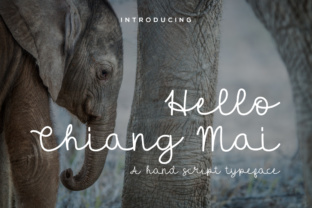
Hello Chiang Mai Font: Stylish Script for Makers
Sitting at my workbench late last Tuesday, surrounded by test prints and half-cut vinyl sheets, I realized the candle labels just weren't landing. The product was a lavender and sage soy blend, meant to evoke relaxation and slow living, but the typography felt stiff and disconnected. I needed something that breathed. That was the moment I opened up Hello Chiang Mai and finally saw the design click into place. As handmade sellers and printable creators, we know that the right typeface isn't just about legibility; it is about transferring a feeling from our hands to the customer’s home. This mono line script font brought exactly the stylish, relaxed vibe my packaging had been missing.
Capturing a Relaxed Vibe in Physical Products
When designing for physical goods like candles, soaps, or boutique packaging, the visual weight of the text matters immensely. Hello Chiang Mai is distinct because it avoids the overly ornate loops that can sometimes make script fonts feel dated or too formal for modern crafts. Instead, it offers a contemporary flow that feels effortless. When I applied it to my matte label stock, the letters connected with a natural rhythm that mimicked actual handwriting rather than digital perfection. This authenticity is crucial for small businesses where the "handmade" aspect is the primary selling point.
The font’s personality shines brightest when used for display purposes rather than dense body copy. It works beautifully as a focal point on:
- Product Labels: Perfect for the main scent name or product title on jars, bottles, and tins.
- Packaging Inserts: Adds a personal touch to thank-you cards included in shipping boxes.
- Tote Bags and Apparel: Creates a soft, bohemian aesthetic on fabric items without looking cluttered.
- Seasonal Signage: Ideal for chalkboard-style welcome signs or market table displays.
Because the font features extensive kerning pairs, the spacing adjusts automatically to ensure smooth connections. For a maker printing dozens of labels, this saves hours of manual adjustment. The result is a professional-grade finish that elevates the perceived value of the item, making a simple soy candle look like a premium lifestyle product.
Digital Downloads and Printable Wall Art
Beyond physical inventory, many of us create digital assets, planners, or printable wall art. In the realm of digital downloads, file size and rendering clarity are paramount. Hello Chiang Mai translates exceptionally well to screen-based mockups and high-resolution PDFs. When designing a set of wedding invitation templates or a digital planner cover, the font retains its charm even when scaled down for tablet viewing or scaled up for large-format printing.
For printable creators, versatility is key. I have found this typeface particularly effective for editorial-style designs where the goal is to mix modern typography with organic warmth. Whether you are creating a bridal shower game, a recipe card template, or an inspirational quote poster, the font provides enough character to stand alone while remaining neutral enough to pair with various color palettes. It bridges the gap between minimalist design and expressive calligraphy, which is often the sweet spot for best-selling printables on platforms like Etsy.
Practical Readability for Cutting Machines
As someone who frequently uses Cricut and Silhouette machines, I am always wary of script fonts that are too thin or have erratic baselines. Hello Chiang Mai is surprisingly friendly for vinyl cutting and paper crafting. The mono line structure means there are no dramatic thick-to-thin transitions that can cause tearing during the weeding process. This makes it a reliable choice for intricate projects like window decals, car stickers, or detailed cake toppers.
However, practical application requires some testing. While the font connects smoothly, extremely small sizes can still pose challenges for adhesive vinyl. I recommend keeping text above 0.75 inches for standard permanent vinyl to ensure clean removal from the backing. For heat transfer vinyl (HTV) on shirts or tote bags, the font holds up well, but using a Teflon sheet during pressing prevents any potential lifting of delicate tails. Always run a test cut on your specific material before committing to a full production batch. The consistent stroke width also makes it easier to adjust offset settings in design software, ensuring your outlines are uniform and professional.
Font Pairing and Brand Consistency
A single font rarely carries an entire brand identity. To maximize the impact of Hello Chiang Mai, thoughtful font pairing is essential. Because this script has such a distinct, relaxed personality, it needs a supporting actor that provides stability and readability. I typically pair it with a clean, geometric sans serif font for secondary information like ingredients, dates, or website URLs. The contrast between the fluid script and the structured sans serif creates a balanced hierarchy that guides the customer’s eye naturally.
For more traditional applications, such as wedding stationery or vintage-inspired packaging, pairing Hello Chiang Mai with a simple serif font can add a touch of elegance without competing for attention. The key is to let the script be the star. Avoid using other decorative or handwritten fonts in the same layout, as this creates visual noise and diminishes the premium feel. Consistency across your shop materials—from your logo design to your social media graphics—builds recognition. When customers see that familiar, flowing script, they should immediately associate it with your unique brand voice.
Licensing and Commercial Considerations
Before integrating any new creative font into your business workflow, verifying the licensing terms is non-negotiable. Hello Chiang Mai is designed for commercial use, but you must confirm the specific scope of your license. If you are selling physical products like mugs, shirts, or candles, a standard commercial license usually suffices. However, if you plan to sell editable templates, SVG files, or digital kits where the end user can manipulate the text, you may require an extended or special license.
Additionally, check the included file formats to ensure compatibility with your software stack. Most makers need OTF or TTF files for desktop design programs, while SVG versions are necessary for cutting machine software. Reviewing the multilingual support is also wise if you serve a diverse customer base or create bilingual packaging. Taking these administrative steps upfront protects your business and ensures you can use the font confidently across all your current and future collections. Ultimately, Hello Chiang Mai is more than just a collection of glyphs; it is a tool that helps translate our creative passion into tangible, beautiful products that resonate with others.